
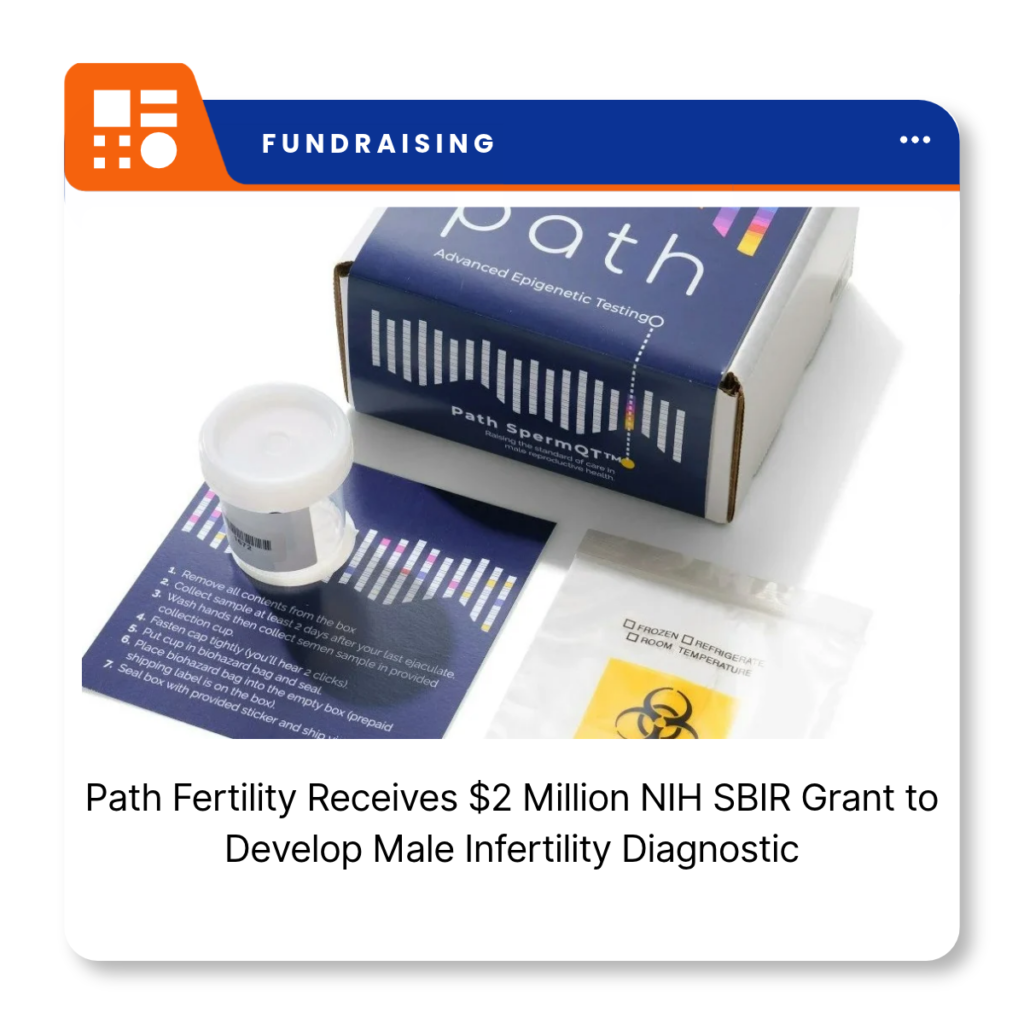
Path Fertility, a Salt Lake City, Utah-based molecular diagnostics company, has received a $2 million Direct to Phase II Small Business Innovation Research (SBIR) grant from the Eunice Kennedy Shriver National Institute of Child Health and Human Development (NICHD), part of the US National Institutes of Health (NIH).
Announced on October 26, 2026, the two-year grant will support the development and clinical validation of an epigenetic diagnostic for non-obstructive azoospermia (NOA), a severe form of male infertility, and research into its association with cancer risk.
Path Fertility is the commercial brand of Inherent Biosciences, Inc. Co-founded by CEO Andy Olson and Chief Scientific Officer Kristin Brogaard, the company develops molecular diagnostic tools that examine epigenetic markers associated with male reproductive health.
The grant-funded research will focus on epigenetic changes in MSH5, a gene involved in DNA repair. The project includes a multi-site clinical study to assess the prevalence of these changes among men with NOA, development of a semen-based diagnostic assay, and an investigation involving 500 colorectal cancer patients.
The company plans to validate the assay in a CLIA-certified laboratory for potential commercialization as a laboratory-developed test. The diagnostic is intended to be incorporated into NOA Guide, Path Fertility’s platform for assessing the likelihood of successful surgical sperm retrieval in men with NOA.
Path Fertility also offers SpermQT, an epigenetic sperm quality test that analyzes DNA methylation patterns associated with sperm function. The test provides information beyond conventional semen analysis, which primarily evaluates characteristics such as sperm count and motility.
The new NIH-supported project expands the company’s diagnostic research into severe male infertility and the potential relationship between reproductive disorders and broader health risks.


